
Guide
Choosing a finish
Two jobs printed from the same file can look nothing alike once they are finished. Start with what the piece has to survive, then decide where you want the eye to land, then check the artwork allows for it.
At a glance
- Lamination
- Protection and surface. Matt or gloss film over the printed sheet; the base for everything else.
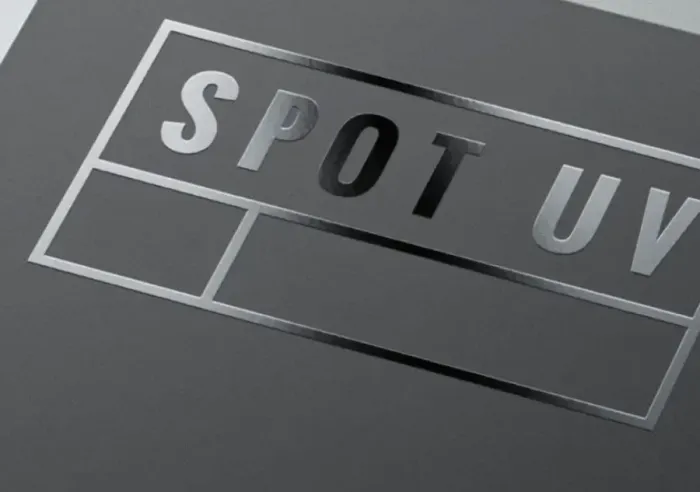
- Spot UV
- Emphasis without metal. Gloss varnish on selected areas, strongest over matt lamination. Also called spot varnish.
- Foil
- Emphasis with metal. Gold, silver or coloured foil pressed into the sheet with a heated die; best on logos, type and rules.
- Die cutting
- Shape. A steel-rule forme cuts and creases the sheet — cartons, windows, rounded corners, shaped labels.
- Order of work
- Print → laminate → Spot UV or foil → die cut.
First question: what does it have to survive?
A catalogue that lives in a bag, a label that is wiped down, a carton that is stacked in a warehouse, a business card that spends a month in a wallet — each is handled far more than it is looked at. In Sri Lanka's humidity the question is sharper still, because an unlaminated cover curls at the fore-edge and a carton panel softens in an unconditioned store room. Lamination answers this question. Gloss deepens colour and suits photography and retail packaging; matt lowers glare, feels softer, and is the surface Spot UV needs underneath it. Pieces read once and discarded — a flyer, a single-use sticker — can often skip it.
Second question: where should the eye land?
Foil and Spot UV both work by contrast, which means they work by restraint. One foiled logo on an otherwise plain card is unmistakable; foil on the logo, the name, the border and the reverse reads as cheaper. The same is true of varnish: pick one element, or one consistent category of element, and leave the rest matt.
Choose foil when the element should read as metal — a mark, a title, a rule. It is opaque, catches light directly and cannot be imitated with ink. Choose Spot UV when the element should keep its printed colour and simply lift off the surface — a photograph, a brand panel, a pattern on an otherwise unprinted sheet. Over matt lamination the difference reads from across a room; over gloss it disappears. The two combine well because they do different jobs: foil on the mark, varnish over the image.
Third question: what shape is it?
Anything that is not a rectangle — a carton, a folder with a window, a round label, a card with rounded corners — is cut from a steel-rule forme made to the outline and kept for reprints. Shape is decided at the dieline stage, before artwork, because text and logos have to stay clear of every cut and crease and background colour has to run past the cut line.
What each finish asks of the artwork
- Lamination: nothing extra, but say which side and whether matt or gloss.
- Spot UV and foil: a separate layer or file containing only the areas to be finished, in solid black at 100%, aligned to the printed artwork. Avoid hairlines and very small type.
- Die cutting: the dieline on its own layer, text and logos clear of cuts and creases, bleed past the cut line.
The artwork guide covers the file side in detail; if your artwork is not set up this way, the design team prepares the layers here.
Typical pairings by product
- Business cards
- Matt lamination with Spot UV on the mark, or foil on the mark with the rest plain. Heavier board does more than any finish.
- Brochure covers
- Matt or gloss lamination on the cover; Spot UV over the title or a key image; foil for a mark that needs authority.
- Labels
- Lamination for wipe resistance; Spot UV or foil on the brand element for premium goods; die cut to shape.
- Cartons
- Lamination as the baseline for transit and stacking; Spot UV over product photography or a brand panel; foil on the mark; die cut with windows where the product should show.
If you are not sure
Describe the piece, the quantity and how it will be handled, and we will say which finishes are worth the money on that job and which are not. The quotation form lets you tick "not sure — please advise".
Common questions
Which finish should I choose if I can only afford one?
Lamination, almost always. It protects the print, stiffens the sheet and sets the surface everything else is judged against. Foil and Spot UV are decisions about emphasis; lamination is a decision about whether the piece still looks new after a month.
Do I have to decide on finishing before printing?
Yes. Foil and Spot UV need their own die or plate made from your artwork, die cutting needs a forme, and the sheet is laid out to allow for them. Adding a finish after a job has printed usually means printing it again.
Can finishes be combined?
Routinely. Matt lamination with Spot UV over it is the most common pairing; foil is often added to the same piece. The order is fixed — lamination first, then Spot UV or foil, then die cutting — and all of it is planned into the sheet before it prints.
Does finishing add time?
Each finish is a further pass, and a new die, plate or forme has to be made first. Indicative ranges are on each product page; the confirmed schedule comes with the quotation.
Planning a print job?
Send the product, quantity, size and finish you have in mind and we will price it. If the specification is not settled yet, describe what you are producing and we will work back to the stock, print method and finishing that suit it.
- Call
- +94 74 281 3330
- Not sure what to specify?
- Use the specification helper