
Business card & stationery printing
Stationery is the print people handle most and look at closest. Card weight, cut edge and finish do more work here than anything on the artwork.
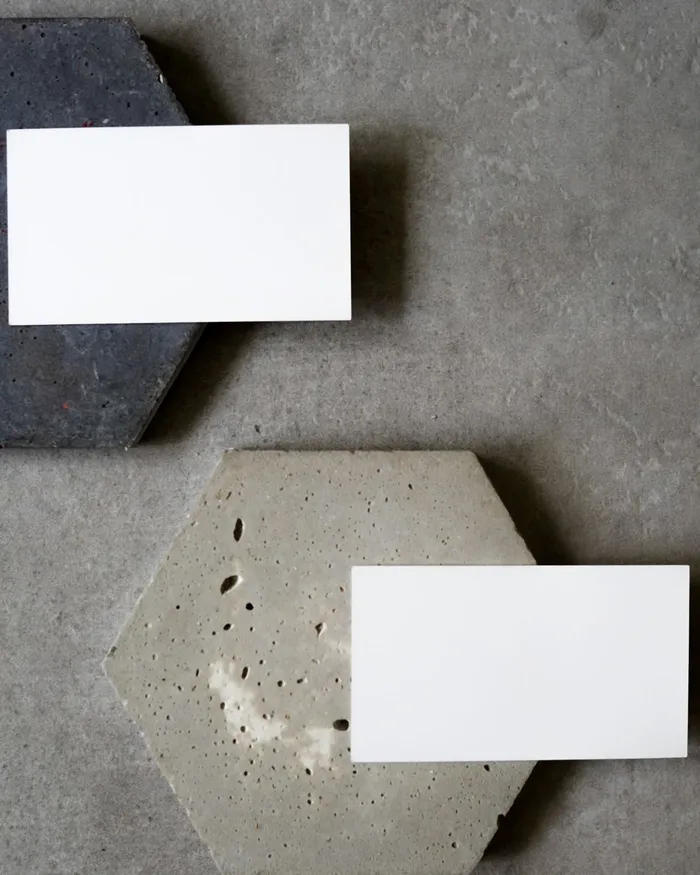
At a glance
- Items
- Business cards (visiting cards), letterheads and continuation sheets, compliment slips, printed envelopes, appointment cards, tags and inserts.
- Card sizes
- 90 × 50 mm or 85 × 55 mm are the common sizes here; other sizes are cut to order.
- Board
- Uncoated boards for a warm, matt feel; coated boards for sharper colour and lamination. Weight chosen for how the card is used.
- Finish
- Foil on the mark, Spot UV over matt lamination, or matt or gloss lamination alone.
- Languages
- English, Sinhala, Tamil and Arabic typeset and proofread in-house; say which language leads.
- To quote
- Items and quantity of each, card size, one or two sides, board preference, finishing and side, how many names or designs.
What we print
- Business cards — visiting cards — single or double sided
- Letterheads and continuation sheets
- Compliment slips
- Printed envelopes
- Appointment cards, tags and inserts
Weight and feel
A business card is judged in the first second, before anything on it is read, and that judgement comes from the weight and the edge. A light card bends in a wallet; a heavier board stays flat and holds a clean cut. Uncoated boards take a fingerprint and feel warm; coated boards keep colour sharper and take lamination well.
If you are unsure, tell us where the cards will be used and how many you order at a time. That is usually enough for us to put two sensible options in front of you.
Finishes that suit small formats
Small pieces reward restraint. Foiling on a logo or a name, with the rest of the card left plain, reads better than foil spread across the layout. Spot UV over a matt laminate gives the same emphasis without metal, and picks up light as the card is turned. Lamination on its own — particularly matt — changes the surface enough to be worth specifying even where nothing else is applied.
Cards set in more than one language
We typeset and proofread Sinhala, Tamil and Arabic in-house, alongside English. That is worth stating plainly, because most printers will place a second script if you supply it as artwork but cannot check whether it is correct — and a card is the last place you want a broken word or a misplaced vowel sign.
A second script is also a layout problem rather than a substitution. It needs its own line spacing to stay readable at card size, a name and title rarely occupy the same width in both languages, and a composition that balances in English can read as crowded once the second language sits beside it. Arabic changes the arrangement further: it reads right to left, so the alignment, the order of the panels and often the position of the logo all move with it.
Send the wording for every language the set has to carry at the start rather than after the English version is approved, and say which language leads. If the artwork is not already laid out that way, we set it here.
Keeping a stationery set together
Cards, letterheads and compliment slips normally carry the same logo and the same brand colour. Printing them in one job means that colour is set once, so the set matches. Printing them separately across the year is how a brand colour quietly drifts.
What to include in your enquiry
- Which items, and the quantity of each
- Card size, and single or double sided
- Any preference on board weight or uncoated versus coated
- Foiling, Spot UV or lamination, and on which side
- Whether names and titles change between cards
Indicative timing
How long a job like this takes
Business cards, letterheads and compliment slips, printed and finished.
Before production approval
These run alongside each other and depend on how quickly proofs come back. The production estimate below starts once they are approved.
- Artwork and proofing1–3 working days
Per proof round, from when we have your content. Depends on how quickly proofs come back to us.
After approval — production
Counted in working days from approval of the final artwork or specification and any payment the quotation asks for.
- Printing and finishing3–7 working days
Plain or laminated cards at the lower end.
- Foil or Spot UV2–4 working days
Added when a new foil die or varnish plate has to be made. A repeat of the same artwork reuses it.
Then
- Collection or deliveryConfirmed with the quotation
Arranged when the job is quoted. Tell us at the enquiry stage how you would like to receive it.
Planning guide, not a promise. Typical ranges for a first order. The "before approval" stages are not added to the production estimate as a fixed sum — they overlap, and their length depends on the approvals — so a whole job is usually the production range plus however long proofing takes. The confirmed schedule for your job comes with the quotation.
What moves it:
- Several different names or designs in one order add proofing rather than press time.
- Uncoated boards and heavier weights may be imported stock.
- Quantity, paper or board availability (imported stocks are quoted against their arrival), and the finishing specified.
- Current workload, and Poya and public holidays.
- How quickly proofs, dielines and samples are approved — the "before approval" stages are in your hands as much as ours.
Common questions
What is the standard business card size?
Cards in Sri Lanka are commonly produced at 90 × 50 mm or 85 × 55 mm. Either works; what matters is that you tell us which one, because the layout and the cutting are set to it.
Can a card be foiled on both sides?
Yes, though each foiled side needs its own pass and its own die, so it affects the price. If the budget is fixed, foil on the front and a well-chosen stock usually reads better than foil on both sides of a thinner card.
Why do reprints sometimes look slightly different?
If a reprint runs on a different stock, or the artwork is re-supplied from a different file, small shifts appear. Reprinting against the original specification is what prevents it — so when you order again, tell us it is a repeat and give us the details of the earlier job.
Planning a print job?
Send the product, quantity, size and finish you have in mind and we will price it. If the specification is not settled yet, describe what you are producing and we will work back to the stock, print method and finishing that suit it.
- Call
- +94 76 620 0995
- Not sure what to specify?
- Use the specification helper